.png)


In business, there are moments when communication stops being a support function and becomes a leadership priority. A product recall, regulatory investigation, cybersecurity breach, IPO, restructuring announcement, activist investor pressure, or sudden CEO transition can materially affect trust, valuation, employee confidence, and customer perception.
In such situations, speed matters. Clarity matters. Alignment matter seven more. Yet many organizations do not need a full-time senior communications leader year-round. They need experienced leadership precisely when the stakes are highest.
That is where a fractional corporate communications leader becomes valuable. Instead of hiring permanently or relying only on external agencies, companies bring in an experienced communications executive for a defined period to lead strategy, execution, governance, and stakeholder messaging during critical phases.
The model gives businesses senior-level judgement without long-term overhead, while ensuring communications is handled as a board-level business issue, not just a media task.

A fractional corporate communications leader is a senior communications executive engaged on a part-time, interim, or project-defined basis to manage high-priority communication mandates.
They typically work directly with the CEO, founders, board, CHRO, CFO, legal teams, and investor relations leaders. Their mandate is broader than public relations. It often includes:
· Crisis communication strategy and response
· IPO and listing communications readiness
· Restructuring and transformation messaging
· Internal communications during uncertainty
· Leadership visibility and spokesperson strategy
· Investor, regulator, media, and stakeholder narratives
· Reputation management and governance protocols
· Building communication systems for future resilience
In short, they bring executive judgement when communication risk becomes business risk.

High-stakes moments now move faster than before. Social media accelerates narratives, employees expect transparency, investors react quickly, and misinformation can spread in minutes. Many organizations also face more frequent change cycles including fundraising, restructuring, leadership transitions, and regulatory scrutiny. Experts increasingly describe modern crises as faster-moving, more complex, and more trust-sensitive than earlier eras.
This has increased demand for experienced communicators who can step in immediately, align stakeholders, and create confidence under pressure.
A fractional communications leader is especially useful when the business needs senior capability urgently but not permanently. Common triggers include:
During product issues, legal disputes, customer backlash, cyber incidents, or executive controversies, the first hours shape perception. Clear internal and external messaging, disciplined spokesperson management, and rapid decision workflows are critical. Crisis planning experts consistently emphasize speed, accountability, and defined response structures.
Going public increases scrutiny. Communication must align with legal and regulatory boundaries while preparing employees, investors, analysts, and media for a new phase of visibility. Strong IPO communications also helps reduce uncertainty internally.
Restructuring is not only an operational exercise. It is a trust exercise. Employees need clarity, managers need guidance, customers need reassurance, and investors need confidence in the rationale and future plan.
A leadership change can create speculation. The right narrative protects continuity while signalling future direction.
When governance concerns, activist pressure, earnings misses, or strategic pivots emerge, communication discipline becomes essential across all stakeholder groups.
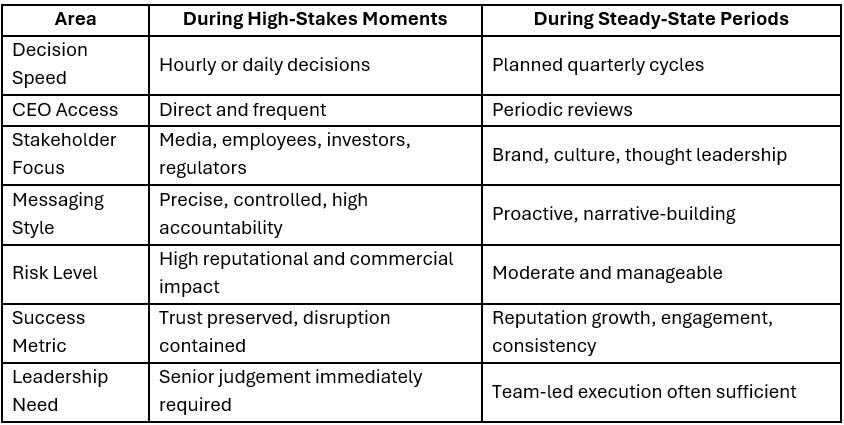
This is why many companies do not maintain an always-on senior communications structure, but activate one when complexity spikes.
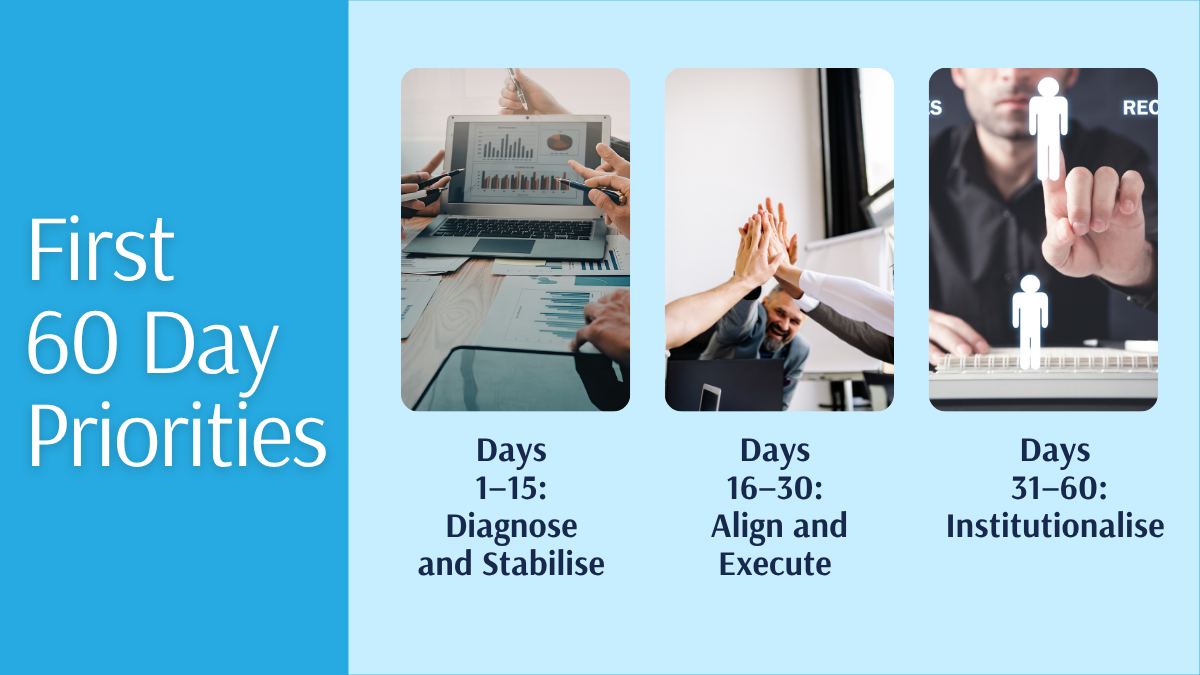
A strong fractional communications leader usually focuses on rapid stabilization first, then long-term capability building.
· Assess risks, narratives, stakeholders, and pressure points
· Review existing messaging, approvals, and response gaps
· Establish leadership communication cadence
· Build a single source of truth for internal teams
· Prepare holding statements and escalation protocols
· Launch stakeholder communication plan
· Coach spokespersons and leadership team
· Coordinate legal, HR, finance, and operations messaging
· Improve monitoring across media, employee sentiment, and digital channels
· Create board-ready communication updates
· Build repeatable playbooks for future scenarios
· Strengthen internal communications processes
· Define governance for approvals and crisis response
· Train functional leaders on communication discipline
· Recommend long-term structure: permanent hire, lean team, or continued fractional support
During high-stakes moments, companies often consider agencies, consultants, or a permanent hire. Each has value, but fractional leadership for crisis management fills a unique gap.
· Compared with agencies: You gain embedded ownership, not only external advice.
· Compared with consultants: You gain execution leadership, not just recommendations.
· Compared with a permanent hire: You gain speed and flexibility without along-term fixed cost commitment.
The real advantage is decision-quality. Experienced leaders have pattern recognition from past crises, transformations, and market-sensitive events. That judgement is hard to replicate through playbooks alone.
In calm periods, communications can feel functional. In defining moments, it becomes strategic infrastructure.
When trust, valuation, employee confidence, or reputation is on the line, companies need more than campaigns. They need leadership.
That is why more businesses are turning to fractional corporate communications leaders during high-stakes moments: not as a temporary substitute, but as a smart way to access proven executive capability exactly when it matters most.
COHIIRE helps businesses access experienced fractional corporate communications leaders who step in quickly, align stakeholders, and lead with clarity when it matters most.
.png)