Sustainability is no longer just a corporate responsibility initiative. It is becoming an important part of how organizations manage risks, attract investment, build stakeholder trust and plan for long-term growth.
As Environmental, Social and Governance (ESG) expectations evolve, businesses are under increasing pressure to demonstrate measurable progress rather than simply make sustainability commitments.
However, building a dedicated sustainability function requires specialized expertise, leadership involvement and organizational resources. Not every business is ready to appoint a full-time Chief Sustainability Officer.
This is where a Fractional Chief Sustainability Officer can play an important role.
By providing experienced sustainability leadership on a flexible basis, fractional executives help organizations strengthen their ESG readiness, establish accountability and integrate sustainability into business strategy.
A Fractional Chief Sustainability Officer is an experienced sustainability executive who works with an organization on a part-time, retained or project-based arrangement.
Unlike a full-time executive, a fractional leader provides strategic direction and implementation oversight according to the organization's specific requirements.
Their responsibilities may include:
· Developing and implementing an ESG strategy.
· Identifying environmental, social and governance risks.
· Establishing sustainability reporting frameworks.
· Defining ESG performance indicators and targets.
· Coordinating sustainability initiatives across business functions.
· Supporting stakeholder engagement and regulatory preparedness.
Fractional Sustainability Leadership allows organizations to access senior-level expertise without immediately building a permanent sustainability leadership structure.
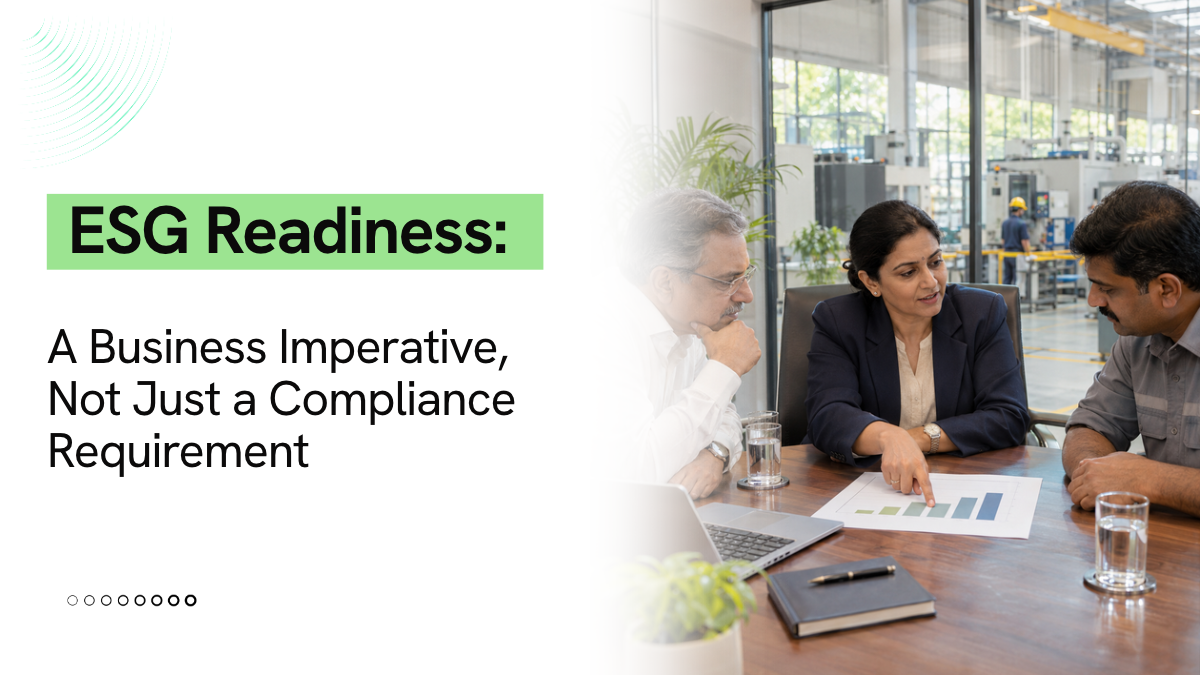
ESG readiness refers to an organization's ability to identify, manage, measure and communicate its environmental, social and governance performance.
It goes beyond sustainability reporting. It requires businesses to incorporate responsible practices into operational decisions, governance structures and long-term planning.
Sustainability disclosures are becoming more structured across global markets.
In India, the Securities and Exchange Board of India (SEBI) mandates Business Responsibility and Sustainability Reporting (BRSR) for the top 1,000 listed companies by market capitalization.
The BRSR Core framework also introduces phased assessment or assurance requirements, extending to the top 1,000 listed entities by FY2026–27.
For businesses operating across multiple markets, navigating different reporting requirements can create additional complexity.
A Fractional Chief Sustainability Officer can help organizations prepare for applicable requirements, establish internal reporting processes and improve data reliability.
Investors, customers and business partners increasingly consider ESG-related risks when evaluating organizations.
For example, manufacturing companies supplying global customers may be asked to disclose emissions data, responsible sourcing practices and sustainability performance.
Businesses lacking structured ESG processes may struggle to respond efficiently to these expectations.
ESG initiatives can also contribute to operational performance.
Improved energy efficiency, responsible resource utilization, waste reduction and sustainable procurement practices can reduce costs and strengthen operational resilience.
The challenge is identifying initiatives that are commercially relevant and capable of delivering measurable outcomes.
A fractional sustainability leader helps organizations move beyond sustainability commitments towards structured implementation.
Many businesses understand the importance of sustainability but lack a clear roadmap for implementation.
A fractional executive can assess existing practices, identify material ESG priorities and establish achievable sustainability goals.
An effective ESG Strategy considers regulatory requirements, business objectives, stakeholder expectations and available resources.
This ensures sustainability initiatives are prioritized according to their relevance and potential impact.
Sustainability initiatives often involve several departments, including operations, finance, procurement, human resources and compliance.
Without clear ownership, implementation can become fragmented.
A Fractional Chief Sustainability Officer can help define responsibilities, establish governance mechanisms and introduce regular performance reviews.
This creates greater accountability and ensures sustainability priorities are reflected in business decisions.
Reliable ESG reporting requires accurate data, consistent measurement and effective internal controls.
Fractional executives can help organizations identify relevant performance indicators and establish systems for collecting sustainability data.
For instance, a manufacturing business operating across multiple plants may need to consolidate information on energy consumption, emissions, waste management and workforce practices.
Structured reporting processes improve visibility and support informed decision-making.
An ESG Strategy delivers value only when it translates intopractical business initiatives.
Fractional sustainability leaders can collaborate with functional teams to implement programs around energy efficiency, waste reduction, responsible sourcing and governance improvements.
They can also establish milestones and track progress against agreed targets.
This helps organizations move from sustainability planning towards measurable execution.

The fractional model can be particularly valuable for organizations that need experienced sustainability expertise but do not yet require continuous, full-time executive involvement.
As organizations expand, they may face increasingly complex reporting requirements and stakeholder expectations.
Fractional Sustainability Leadership helps establish sustainability processes and governance structures while maintaining flexibility in leadership investment.
Manufacturers operating in global supply chains frequently encounter customer requirements involving emissions, ethical sourcing and environmental performance.
Fractional executives can help align internal sustainability practices with these evolving expectations.
Private equity investors may require portfolio companies to strengthen ESG governance, track sustainability performance and improve risk management.
Fractional sustainability leaders can help establish relevant frameworks and support ESG-related initiatives during periods of business transformation.
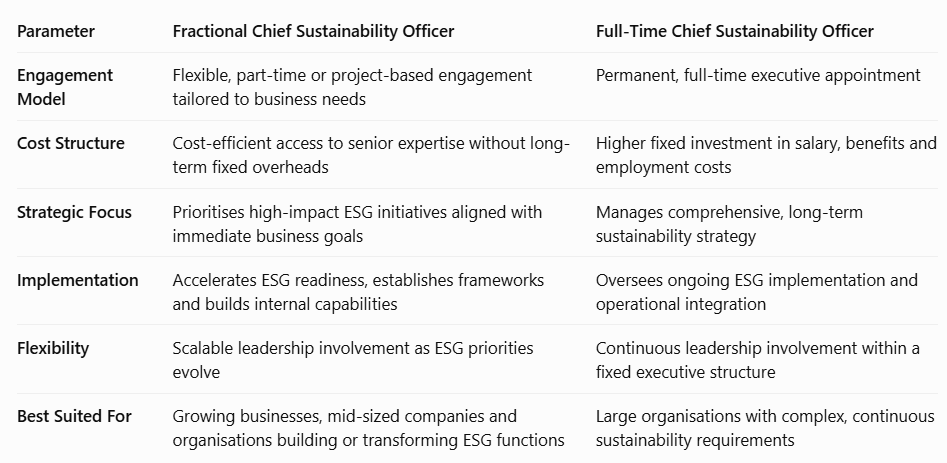
Both leadership models bring valuable sustainability expertise, but their suitability depends on organizational maturity and requirements.
A full-time Chief Sustainability Officer may be appropriate for large organizations with complex sustainability operations, extensive reporting obligations and continuous executive-level responsibilities.
A fractional executive may be more relevant for businesses establishing their sustainability functions, preparing for new disclosures or implementing specific ESG transformation initiatives. As explored in our blog on how fractional CXOs help businesses grow without significant leadership costs, this model allows organizations to access experienced leadership while maintaining flexibility in their executive structure.
And the distinction is not simply about cost. It is about accessing the right level of expertise at the appropriate stage of organizational development.
As ESG considerations become more closely connected with business strategy, organizations will need experienced leaders who can balance sustainability priorities with commercial realities.
The Fractional Chief Sustainability Officer model offers businesses a flexible way to access this expertise while developing internal capabilities.
Rather than treating sustainability as a stand-alone compliance exercise, organizations can integrate ESG priorities into governance, operations and long-term planning.
Ultimately, ESG readiness depends on clear priorities, leadership accountability and consistent execution.
For businesses navigating this transition, fractional sustainability leadership offers a practical approach to building stronger sustainability capabilities and supporting long-term business growth.
At COHIIRE, we believe that access to the right leadership expertise should align with an organization's evolving business needs. Access experienced Chief Sustainability Officers who can strengthen ESG governance, drive strategic initiatives and build long-term sustainability capabilities.